

Hanuman Jayanti
Hanuman Janmotsav
Kept on the day the tithi stands at sunrise; the observance runs through the day.
Celebrates the birth of Hanuman, the devoted disciple of Rama. Devotees read the Hanuman Chalisa and visit Hanuman temples.
Daily Almanac
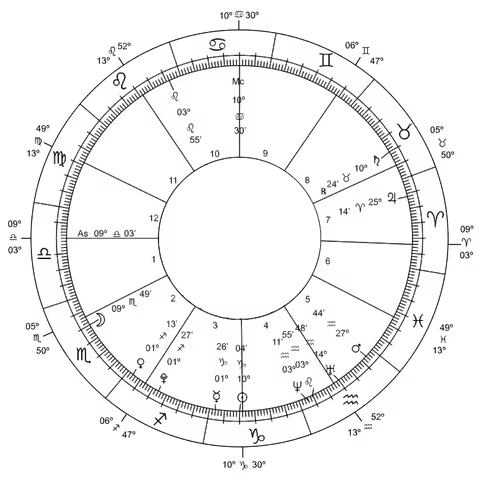
Today is Thursday, in the Shukla Paksha. Today is Hanuman Jayanti. The tithi is Purnima till morning, then Pratipada begins. The Moon is in Hasta nakshatra till evening, then Chitra. Start new work in Abhijit Muhurta, 12:00 to 12:49, and avoid it in Rahu Kaal, 13:58 to 15:32. The Moon is in Kanya rashi and the Sun in Meena.
Hanuman Janmotsav
Kept on the day the tithi stands at sunrise; the observance runs through the day.
Celebrates the birth of Hanuman, the devoted disciple of Rama. Devotees read the Hanuman Chalisa and visit Hanuman temples.
Adhika Chaitra
Sacred lunar leap month — a time for fasting, charity, and devotional practice.
Purnima
Prev day 07:06 upto Same day 07:41
Krishna Pratipada
Same day 07:41 Next day 08:42
Purnima or Amavasya — full or new moon. A potent day for devotion, completion, and intention-setting.
Thursday
Thursday — ruled by Jupiter. The most auspicious weekday; favourable for learning, ceremony, and new beginnings.
Hasta
Prev day 16:16 upto Same day 17:38
Chitra
Same day 17:38 Next day 19:24
Light nakshatra — suited for swift, light activities — short trips, communications.
Dhruva
Prev day 14:49 upto Same day 14:18
Vyaghata
Same day 14:18 Next day 14:07
An auspicious yoga — sun and moon align favourably today. Considered supportive for most new beginnings.
Bava
Prev day 19:21 upto Same day 07:41
Balava
Same day 07:41 Same day 20:09
Kaulava
Same day 20:09 Next day 08:42
A movable karana — the regular daytime half-tithi. Suitable for most everyday activities.
Panchang windows not defined here today
Choghadiya, Gowri and Rahu Kalam each divide local daylight into eight parts. At very high latitudes (above ~66°) the sun can stay up — or stay down — for the whole day, so a local sunrise/sunset pair doesn't exist for this date. Tithi, nakshatra and yoga above are still valid.
A North Indian timing system: eight day windows and eight night windows, each rated good, neutral, or bad. A quick way to pick (or avoid) a slot for an everyday task.
A South Indian tradition that splits the day and night into eight Gowri windows each — used for picking auspicious slots for everyday work.
A short-list of the six most important windows — three auspicious (Brahma, Abhijit, Amrit) and three to avoid (Rahu, Yamaganda, Gulika). Some days may show fewer if a window isn't computed.
Each day and night splits into twelve planetary hours, each ruled by a planet. The ruling planet sets the hour's tone — pick an hour whose ruler suits the task.
Purnima · Thu
Apr 2
Daily Almanac
Daytime periods
8·1h 34m| 06:1007:44 | ||
| 07:4409:17 | ||
| 09:1710:51 | ||
| 10:5112:24 | ||
| 12:2413:58 | ||
| 13:5815:32 | ||
| 15:3217:05 | ||
| 17:0518:39 |
Night periods
8·1h 26m| 18:3920:05 | ||
| 20:0521:31 | ||
| 21:3122:58 | ||
| 22:5800:24 | ||
| 00:2401:50 | ||
| 01:5003:16 | ||
| 03:1604:43 | ||
| 04:4306:09 |
| 04:38→05:24 | ||
| 12:00→12:49 | ||
| 11:17→12:59 | ||
| 13:58→15:32 | ||
| 06:10→07:44 | ||
| 09:17→10:51 | ||
| 01:09→02:50 |
Daytime hours
12·1h 2m| 06:1007:12 | ||
| 07:1208:15 | ||
| 08:1509:17 | ||
| 09:1710:20 | ||
| 10:2011:22 | ||
| 11:2212:24 | ||
| 12:2413:27 | ||
| 13:2714:29 | ||
| 14:2915:32 | ||
| 15:3216:34 | ||
| 16:3417:37 | ||
| 17:3718:39 |
Night hours
12·57 min| 18:3919:37 | ||
| 19:3720:34 | ||
| 20:3421:31 | ||
| 21:3122:29 | ||
| 22:2923:26 | ||
| 23:2600:24 | ||
| 00:2401:21 | ||
| 01:2102:19 | ||
| 02:1903:16 | ||
| 03:1604:14 | ||
| 04:1405:11 | ||
| 05:1106:09 |
Calculated using Lahiri ayanamsa and the Drik Ganita (true-position) method.

Install the app for faster readings, saved chats and your daily panchang.

Scan this code to install the app on your phone.

We use cookies to understand how KundliGPT is used and to improve it. Privacy policy ·