

KP vs Traditional Vedic
How the two systems differ — and where they agree
Overview
KP and traditional Vedic astrology share their foundations but part ways in method. Both use the same nine planets, twelve signs, twenty-seven nakshatras and the Vimshottari dasha. Where they differ is in how houses are measured, what decides a result, and which ayanamsa is used. The short version: traditional astrology paints a rich, broad picture of your life, while KP zooms in to answer one question at a time with as little ambiguity as possible.
The same roots
Anyone who knows Vedic astrology already knows most of KP. The planets and their natures, the signs, the nakshatras and their lords, and the Vimshottari dasha that times events are all carried over unchanged. KP does not throw any of this out — it builds a more precise reading method on top of it.
Where they split
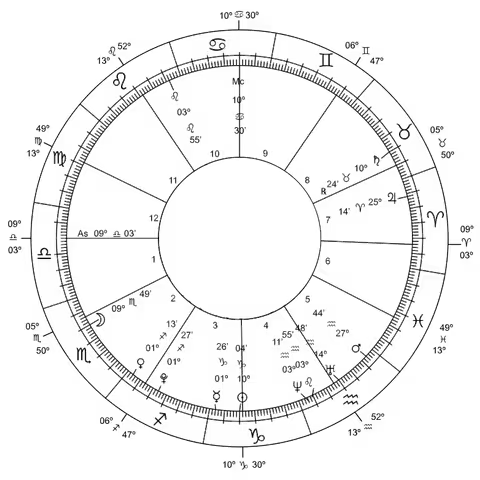
Traditional Vedic astrology typically treats a whole sign as one house and reads a matter through several planets at once, producing a layered, descriptive picture. KP measures each house by its exact cusp degree using the Placidus system, then puts the cuspal sub-lord in charge of the verdict. It also adopts the Krishnamurti ayanamsa, so degrees can differ slightly from a Lahiri-based chart. The result is a system that trades some of the broad narrative for a sharper, more answerable result.
Two ways of timing an event
Both schools time events with the Vimshottari dasha, but they refine it differently. Traditional Vedic astrology leans on transits (gochara) and divisional charts to confirm a period, reading the whole picture together. KP filters the dasha through significators and the ruling planets of the moment, often going down to the finer sub-periods, to pin a narrow window. The shared dasha is a big reason a Vedic astrologer can pick up KP quickly.
Which one should you use
It depends on the question. For a broad understanding of personality, strengths and the shape of a life, traditional Vedic astrology is the natural fit. For a specific, answerable question — will this deal close, when will the marriage happen — KP's sub-lord method is sharper. Many astrologers use both: the Vedic chart for the overview, KP for the precise call.
Frequently asked questions
- Is KP better than traditional Vedic astrology?
- Neither is simply better — they serve different goals. KP is excellent for precise yes-or-no questions and timing, while traditional Vedic astrology gives a fuller picture of personality and life direction.
- Can the same chart give different houses in KP and Vedic?
- Yes. Because KP uses Placidus cusps and a slightly different ayanamsa, a planet near a house boundary can fall in different houses in the two systems.
- Do KP and Vedic use the same dasha?
- Yes — both rely on the Vimshottari dasha for timing, which is part of why a Vedic astrologer can learn KP quickly.
- Can I use KP and Vedic together?
- Many astrologers do. They read the broad picture with traditional Vedic methods, then use KP's cuspal sub-lord and ruling planets to pin down whether and when a specific event will occur.
Get a KP reading from our AI astrologer
Have a question that needs a clear answer? Chat with our AI astrologer and explore how KP techniques apply to your chart.
Chat with AI Astrologer