

What is KP Astrology
The precise, prediction-first school of Vedic astrology
Overview
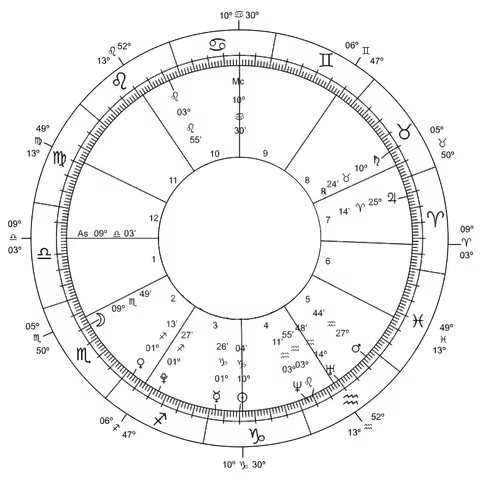
KP astrology — short for Krishnamurti Paddhati, meaning 'Krishnamurti's method' — is a system built by Prof. K.S. Krishnamurti in the mid-1900s to make astrology give sharper, more definite answers. It uses the same planets, signs and nakshatras as traditional Vedic astrology, but reads a chart through the sub-lord, the unequal Placidus houses and its own ayanamsa. The aim is simple: instead of a broad description of your life, KP tries to answer a specific question with a clear yes, no, or when.
Why a new method was needed
Traditional astrology often gives several planets a say in the same matter, which can leave a reading open to interpretation. Krishnamurti wanted a way to settle the question — will this event happen or not — without that ambiguity. His answer was to look past the sign and even past the nakshatra, down to the sub-lord of the relevant point, and let that single planet cast the deciding vote.
What stays the same, what changes
KP keeps the nine planets, the twelve signs, the twenty-seven nakshatras and the Vimshottari dasha for timing — so a Vedic astrologer recognises all the building blocks. What changes is the emphasis: KP measures houses by exact cusp degrees using the Placidus system, and it judges almost everything through the sub-lord chain rather than the sign-lord alone.
The tools KP adds on top
Four ideas turn ordinary Vedic basics into the KP method. The sub-lord divides each nakshatra into nine unequal parts and casts the final vote. The cuspal sub-lord applies that same idea to a house's starting degree and decides whether the house's matter is even promised. Significators rank the planets that carry a house's results, and ruling planets read the live moment to confirm timing. The 249 system maps all of this across the zodiac so a single number can power a horary reading.
How a KP reading works in practice
A KP judgement follows clear steps rather than free interpretation. You frame a precise question, find the cuspal sub-lord of the house that owns the matter, and check whether it promises the result. If it does, you look at the significators to see which planets will deliver it, then use the Vimshottari dasha and the ruling planets of the moment to time it. The output is meant to be a definite answer — yes, no, or when — not a general description.
Sources
- K.S. Krishnamurti — Krishnamurti Paddhati (Readers 1–6)
Frequently asked questions
- Is KP astrology different from Vedic astrology?
- It is a branch of Vedic astrology, not a separate tradition. It shares the same planets, signs, nakshatras and dasha system, but uses the sub-lord, Placidus houses and the KP ayanamsa to give more precise, event-focused answers.
- Who created KP astrology?
- Professor K.S. Krishnamurti, an Indian astrologer, developed and published the method through a series of books known as the KP Readers in the 1960s and 70s.
- Why is KP considered more accurate for predictions?
- Because it narrows a judgement down to one deciding factor — the sub-lord of the relevant cusp — instead of weighing many planets at once, it tends to give cleaner yes-or-no answers and tighter timing.
- Is KP astrology good for beginners?
- Yes. Because its rules are systematic, once you learn the sub-lord and how to read significators, judgements follow clear steps rather than open interpretation. Some Vedic basics help, but you do not need years of study to start.
Get a KP reading from our AI astrologer
Have a question that needs a clear answer? Chat with our AI astrologer and explore how KP techniques apply to your chart.
Chat with AI Astrologer